Table of Contents
ToggleMost homeowners stash clothes wherever they fit, crammed into overstuffed drawers, piled on chairs, or buried in closets that haven’t seen daylight since last spring. But good clothing storage isn’t just about clearing floor space. It protects garments from wrinkles, dust, and damage while making mornings easier and bedrooms more functional. Whether working with a spacious walk-in or a studio apartment closet the size of a phone booth, the right storage solutions extend the life of clothing and reclaim valuable square footage without requiring a full renovation.
Key Takeaways
- Proper clothing storage solutions protect garments from wrinkles, dust, and damage while improving bedroom functionality and home value.
- Modular closet organization systems with vertical standards and adjustable shelving adapt to changing storage needs and support 50-75 pounds per bracket when mounted to studs.
- Vertical storage strategies for small bedrooms—including wall-mounted rails, over-door organizers, and floor-to-ceiling shelves—maximize space without consuming floor area.
- Under-bed storage using rigid plastic bins with latching lids can reclaim 10-15 cubic feet of wasted space for out-of-season clothing and bulky items.
- Seasonal wardrobe rotation timing and proper storage techniques, such as using breathable garment bags and climate-controlled locations, prevent moisture damage and pest infestations.
- DIY clothing storage projects like freestanding garment racks and wall-mounted pegboard organizers deliver professional results with basic tools and minimal cost.
Why Proper Clothing Storage Matters for Your Home
Improper clothing storage costs money. Wrinkled dress shirts need dry cleaning, sweaters develop moth holes in humid conditions, and leather jackets crack when crushed under winter coats. Beyond garment preservation, disorganized clothing storage creates functional problems throughout the bedroom.
Clutter reduces usable floor space, making rooms feel smaller and harder to clean. When garments pile up on furniture, bedrooms lose their intended function as restful spaces. Items stored incorrectly also become difficult to locate, leading to duplicate purchases and wasted time searching through tangled piles.
Proper storage systems provide specific benefits:
- Air circulation prevents mildew and musty odors in natural fibers
- Weight distribution maintains garment shape and prevents stretching
- Light protection stops UV damage and color fading on delicate fabrics
- Accessibility reduces decision fatigue during rushed mornings
The structural impact matters too. Overloaded closet rods can pull mounting hardware from drywall, especially in older homes where anchors weren’t installed into studs. A standard 1-5/16″ closet rod supports roughly 30-35 pounds per linear foot when properly mounted to wall studs or with heavy-duty anchors. Exceed that weight, and the rod bows or the brackets fail.
Good storage also supports home value. Real estate professionals consistently note that organized closets photograph well and help buyers visualize living in the space. It’s not about expensive custom systems, it’s about intentional use of available volume.
Closet Organization Systems That Transform Your Space
Wire shelving served its purpose for decades, but modern closet organization systems offer better adjustability and weight capacity. The key difference lies in how systems divide vertical and horizontal space.
Modular closet kits use vertical standards (wall-mounted tracks) that accept brackets at any height. These systems adapt as storage needs change, shift a shelf up to accommodate tall boots, or add a second hanging rod for shirts. Most modular systems support 50-75 pounds per bracket when mounted to studs.
Key components include:
- Double-hang rods: Stack short garments (shirts, folded pants) to reclaim vertical space
- Adjustable shelving: Use 12-inch depth for shoes and accessories, 16-inch depth for folded sweaters and jeans
- Pull-out baskets: Ventilated wire or solid drawers for undergarments and workout clothes
- Valet rods: Swing-out hooks for staging next-day outfits
Installation requires a drill, level, stud finder, and about three hours for a standard 6-foot reach-in closet. Locate studs first, drywall anchors alone won’t support a loaded system. If studs don’t align with desired bracket positions, install a 1×4 backer board horizontally across studs, then mount standards to the backer.
For renters or temporary solutions, tension rods and freestanding wardrobes provide flexibility. Spring-loaded tension rods fit between walls without hardware but max out around 20 pounds, fine for scarves and lightweight tops, inadequate for coats.
Many homeowners adopt dedicated shoe storage approaches that integrate with closet systems, using slanted shelves or cubbies that maximize visibility while protecting footwear.
Creative Storage Ideas for Small Bedrooms
Small bedrooms demand vertical thinking and furniture that works double-duty. Standard bedroom layouts waste the upper two-thirds of wall height and ignore spaces under beds and behind doors.
Wall-mounted clothing rails installed 72 inches from the floor provide hanging storage without consuming floor space. Use industrial pipe fittings or modern floating brackets rated for at least 30 pounds. Position rails opposite windows to prevent sun damage to hanging garments.
Over-door organizers reclaim wasted space but check door clearance first. Solid-core doors handle more weight than hollow-core varieties. Fabric pocket organizers work for accessories: metal racks suit shoes and handbags.
Wardrobe cabinets function as instant closets in rooms lacking built-ins. Look for units with both hanging rods and shelving. Measure doorways before purchase, many wardrobes require assembly inside the room because they won’t fit through a standard 30-inch interior door frame.
Small spaces benefit from storage strategies for tight quarters that prioritize accessibility and maximize every cubic foot.
Under-Bed and Vertical Storage Solutions
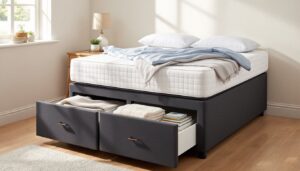
The average bed frame wastes 10-15 cubic feet of storage volume. Reclaim it with purpose-built containers or platform bed frames with integrated drawers.
Under-bed storage bins should measure 6 inches tall maximum for standard bed frames. Wheeled bins simplify access. Use these for out-of-season clothing, spare bedding, or bulky items like winter coats. Avoid cardboard containers, they collapse under weight and attract pests. Rigid plastic bins with latching lids protect contents from dust and humidity.
Platform beds with drawers eliminate the need for a separate dresser. Quality examples feature full-extension drawer slides rated for 75+ pounds and solid-wood or plywood drawer boxes. Particleboard drawers sag under the weight of folded denim and sweaters.
Floor-to-ceiling storage captures unused vertical space. Install floating shelves above doorways or in corners for items accessed less frequently. Keep everyday clothing at eye level (48-66 inches) and reserve high storage for seasonal items.
Implementing broader organizational tactics helps maintain order once storage infrastructure is installed.
DIY Clothing Storage Projects You Can Build This Weekend
Custom storage doesn’t require cabinetry skills. Three projects deliver professional results with basic tools and dimensional lumber from any home center.
Project 1: Freestanding Clothing Rack
Build a sturdy garment rack using:
- Two 2×4s cut to 60 inches (uprights)
- Two 2×4s cut to 48 inches (base supports)
- One 1-5/16″ closet rod cut to 48 inches
- Wood glue and 3-inch exterior screws
- Closet rod brackets
- Create H-shaped bases by attaching 24-inch cross pieces to uprights
- Stand uprights parallel, 48 inches apart
- Mount rod brackets 60 inches from floor on inside faces
- Sand, stain, or paint before installing rod
Total materials cost: $25-35. Build time: 2 hours.
Project 2: Closet Shelf Dividers
Keep folded stacks organized with vertical dividers cut from 1/4-inch plywood or hardboard. Cut pieces 12 inches tall and as deep as shelves. Space dividers 10-12 inches apart to section sweaters, jeans, and t-shirts. No fasteners needed, dividers friction-fit between shelf and ceiling or upper shelf.
Project 3: Wall-Mounted Peg Board Storage
Pegboard provides adjustable storage for accessories, hats, bags, and jewelry.
Materials:
- One 2×4-foot pegboard panel (1/4-inch thick)
- Four 1-inch spacer blocks (cut from scrap 1×2)
- Pegboard hooks and baskets
- Mount spacer blocks to wall studs in each corner
- Attach pegboard to spacers using 1-1/4″ screws (spacers create clearance for hooks)
- Arrange hooks as needed
Paint pegboard before mounting to match room colors. Many DIYers explore broader storage projects once comfortable with basic carpentry.
Safety note: Wear safety glasses when cutting lumber and hearing protection when using power saws. Vacuum sawdust immediately, it’s slippery on hard floors.
Seasonal Wardrobe Rotation and Storage Tips
Most people wear 20% of their wardrobe 80% of the time. Seasonal rotation keeps current clothing accessible while protecting off-season items.
Timing rotation: Swap wardrobes when daytime temperatures consistently stay above 65°F (spring) or drop below 50°F (fall). Don’t rush the switch, transitional weather demands layering pieces from both seasons.
Preparation steps:
- Clean everything before storage. Body oils and invisible stains attract insects and cause yellowing
- Skip dry cleaner bags, trapped moisture promotes mildew. Use breathable garment bags or cotton sheets
- Fold knits, hanging stretches shoulders and creates misshapen sweaters
- Stuff boots and structured bags with acid-free tissue to maintain shape
Storage containers: Clear plastic bins with gasket lids work for most situations. Avoid vacuum bags for natural fibers, compression damages wool and down. Vacuum storage suits bulky synthetic items like fleece jackets and polyester comforters.
Location matters: Store clothing in climate-controlled areas. Attics experience temperature extremes that fade colors and make elastic brittle. Basements risk humidity and potential flooding. If basement storage is unavoidable, elevate bins on 2×4 runners and use desiccant packets to control moisture.
Moth prevention: Cedar blocks and lavender sachets smell nice but provide minimal protection. For wool, cashmere, and other natural fibers, use sealed containers. Moths need air access to infest clothing. Inspect stored items every 8-12 weeks for signs of damage.
Labeling: Mark bins by season and category: “Winter, Sweaters,” “Summer, Shorts/Tees.” Include a brief contents list on each bin. This prevents unnecessary rummaging and helps identify items for donation during rotation.
Rotation also provides natural checkpoints to assess wardrobe size. If items haven’t been worn in 2+ years, they’re consuming valuable storage real estate. Effective organizing principles emphasize regular editing alongside storage improvements.
Conclusion
Effective clothing storage balances accessibility with protection, using vertical space and purpose-built systems rather than piling garments wherever they fit. Whether installing modular closet components, building weekend projects from dimensional lumber, or rotating seasonal wardrobes into climate-controlled containers, the goal remains consistent: preserve garments, reclaim floor space, and reduce morning chaos. Start with one closet or one project, measure twice, and mount hardware to studs, not just drywall.