Table of Contents
ToggleOpen storage isn’t just a trend, it’s a practical shift in how homeowners think about organization. Instead of hiding everything behind closed doors, exposed shelving and open systems put everyday items within easy reach while adding visual interest to rooms. Done right, open storage can make spaces feel larger, more personal, and surprisingly tidy. Done wrong, it becomes a dust-collecting clutter magnet. The difference comes down to smart planning, the right materials, and realistic maintenance habits. Whether you’re working with a cramped kitchen or a sprawling closet, open storage solutions offer flexibility that traditional cabinetry can’t match.
Key Takeaways
- Open storage solutions cost 40–60% less than closed cabinetry while improving accessibility and adaptability for everyday items.
- Successful open storage requires smart material selection, proper installation (like anchoring floating shelves to wall studs), and consistent maintenance through weekly dusting.
- Organize open storage by frequency of use, placing daily items at eye level and limiting decorative objects to one-third of shelf space to prevent clutter.
- DIY open storage projects like pipe shelving units and pegboard walls can be completed in a weekend for $40–$250, making them budget-friendly options for multiple rooms.
- Quarterly reevaluation and honest editing of displayed items prevent open storage from becoming a dust-collecting clutter magnet.
What Are Open Storage Solutions and Why Are They Popular?
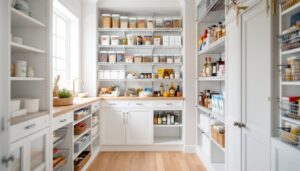
Open storage eliminates the front panels, doors, and drawer faces typical of closed cabinetry. Think wall-mounted shelves, freestanding racks, pegboards, and exposed hanging systems. The appeal is threefold: accessibility, affordability, and adaptability.
Accessibility means no fumbling with cabinet doors when your hands are full. Daily-use items stay visible and within arm’s reach. Affordability plays a big role, open shelving costs roughly 40–60% less than comparable closed cabinetry because you’re skipping doors, hinges, and hardware. A basic 8-foot run of floating pine shelves might cost $150–$250 in materials, while framed cabinets for the same span start around $600.
Adaptability is where open storage really shines. Shelf spacing adjusts to accommodate everything from dinner plates to oversized cookbooks. Freestanding units move from room to room as needs change. And visually, open systems create breathing room, particularly valuable in smaller homes where closed cabinetry can feel heavy and oppressive.
That said, open storage demands more discipline. Everything on display needs to earn its place, and dust becomes a regular housekeeping task rather than an annual cabinet-cleanout event.
Best Open Storage Ideas for Every Room
Open Shelving in Kitchens and Dining Areas
Kitchens were early adopters of the open storage movement, and for good reason. Replacing upper cabinets with shelves opens sightlines, especially in galley kitchens or spaces with a single window. Floating shelves made from 1.5-inch-thick hardwood (actual dimension, not nominal) can span 36–48 inches between supports when properly anchored to wall studs with heavy-duty brackets rated for at least 50 pounds per pair.
For dish storage, aim for 12–14 inch depth to accommodate standard dinner plates. Go shallower (8–10 inches) for spice jars and glassware to prevent items from getting lost at the back. Professionals working with kitchen organization systems often recommend mixing open and closed storage, keeping everyday dishes and glassware exposed while tucking away less photogenic items like plastic containers.
Pot racks offer another practical option. Ceiling-mounted versions require locating joists (use a stud finder and confirm with a pilot hole) and installing lag bolts into solid wood, not just drywall. Wall-mounted racks work well over ranges or prep areas but must clear the cooktop by at least 30 inches per most fire codes.
Bedroom and Closet Open Storage Options
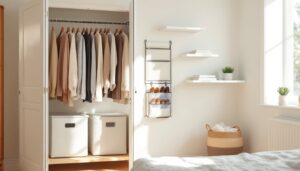
Bedrooms benefit from open storage when traditional dressers eat up too much floor space. Clothing racks with a single horizontal rod can hold approximately 80 pounds of hanging garments if constructed from 1-inch steel pipe with flanged wall mounts. Add a top shelf for folded items or bins.
Closet organization improvements often start with removing the builder-grade single rod and replacing it with a double-hang system. Install the upper rod at 80–84 inches for long items and a lower rod at 40–42 inches for shirts and folded pants. The space below becomes prime territory for shoe racks or pull-out baskets.
Cube organizers built from 3/4-inch plywood offer modular flexibility. A 9-cube unit (three high, three wide) with 13-inch square openings fits standard fabric bins and can be assembled with wood glue and pocket screws for a surprisingly sturdy result. Paint or stain before assembly for cleaner edges.
Choosing the Right Materials and Styles
Material choice determines both longevity and load capacity. Solid wood (pine, oak, maple) handles heavy loads and ages well but costs more and requires periodic maintenance. Nominal 2×10 or 2×12 lumber (actual dimensions 1.5 × 9.25 or 1.5 × 11.25 inches) makes excellent shelving for garages and utility areas, plan on $3–7 per linear foot depending on grade and species.
Plywood offers stability at lower cost. 3/4-inch cabinet-grade plywood won’t sag under normal loads (books, dishes) when supported every 32 inches. Edge-band the exposed plywood edges with iron-on veneer for a cleaner look. Avoid particleboard and MDF in humid areas like bathrooms, they swell and fail when exposed to moisture.
Metal shelving (steel or aluminum) suits industrial aesthetics and high-load applications. Powder-coated steel resists rust better than painted finishes. Look for shelves rated for at least 200 pounds per shelf if storing tools or canned goods.
For brackets and hardware, match the finish to other fixtures in the room (brushed nickel, matte black, oil-rubbed bronze). Floating shelf brackets should penetrate at least 1.5 inches into solid wood studs. In masonry walls, use sleeve anchors or wedge anchors rated for the expected load. Toggle bolts work for drywall-only installations but limit capacity to about 30 pounds per anchor.
Style-wise, open storage ranges from minimalist (simple white shelves, uniform containers) to eclectic (mixed wood tones, visible collections). Consistency matters more than the specific style, matching shelf thickness and bracket style throughout a room creates visual cohesion even when displaying varied items.
DIY Open Storage Projects You Can Build This Weekend
Pipe Shelving Unit
This industrial-style project uses 3/4-inch black iron pipe and lumber. For a three-shelf unit 60 inches wide and 72 inches tall, you’ll need:
- Six floor flanges
- Twelve 3/4-inch tee fittings
- Pipe cut to length (four 60-inch horizontals, six 24-inch verticals)
- Three 1×12 boards cut to 60 inches (actual width: 11.25 inches)
Thread quality matters, factory threads are cleaner than hardware-store cut pipe. Assemble the frame first, checking for level and square before attaching shelves with 1.5-inch wood screws from underneath. Total material cost: $180–$250. Build time: 4–6 hours including staining or sealing the wood.
Pegboard Tool Wall
Hardware stores sell 4×8-foot pegboard sheets in 1/4-inch thickness for $20–$30. Mount the panel to wall studs using 1×2 furring strips as spacers (pegboard hooks need clearance behind the panel). Locate studs, cut furring strips to span the full height, and attach with 2.5-inch screws every 16 inches. Face-screw the pegboard through the furring strips.
Paint the pegboard before installation, rolling on two coats of semi-gloss paint improves appearance and cleanability. Total cost: $40–$60. Time: 3–4 hours.
Floating Corner Shelves
Corners often go unused. Build triangular shelves from 3/4-inch plywood, cut 45-degree angles on two sides to fit the corner, leaving the front edge as your display surface. A 16-inch front edge creates a shelf roughly 11 inches deep on each wall.
Attach with L-brackets mounted to studs on both walls, or use concealed brackets that insert into routed grooves on the shelf’s back edges. Sand all edges smooth, apply strategic storage upgrades with stain or paint, and mount level. Cost: $15–$25 per shelf. Time: 1–2 hours each.
How to Keep Open Storage Organized and Clutter-Free
Open storage fails when it becomes a catchall. Maintenance starts with honest editing, if you wouldn’t frame it and hang it on the wall, reconsider whether it belongs on display.
Use uniform containers for categories of items that aren’t inherently attractive. Wire baskets, canvas bins, or ceramic canisters corral smaller objects while maintaining visual order. Label the containers if they’re opaque, you’ll save time hunting for things later.
Establish zones by frequency of use. Daily items live at eye level (60–65 inches off the floor). Occasional-use items go high or low. Rotate seasonal items in and out rather than crowding shelves year-round.
Dust weekly. Open shelving collects airborne particles faster than closed cabinets. A microfiber cloth takes 5 minutes per shelving unit. Schedule it like any other maintenance task. Homes using simplified organization approaches report better long-term success when cleaning becomes routine rather than an emergency response to visible grime.
Limit decorative objects to one-third of shelf space. The remaining two-thirds should be functional items you actually use. This ratio keeps shelves from looking like overstuffed retail displays while ensuring the system serves a practical purpose.
Reevaluate quarterly. Pull everything off the shelves, wipe them down, and critically assess whether each item still deserves its spot. Kitchens and closets benefit most from this discipline. Interior designers tracking small-space organization tactics consistently find that regular culling prevents clutter creep better than any organizing product.
For homes with children or pets, establish clear rules about what doesn’t go on open shelves, fragile items, anything toxic, and small objects that become projectiles. Lower shelves near play areas should hold only sturdy, child-safe items.