Table of Contents
ToggleCluttered bedrooms don’t just look messy, they mess with your sleep, your morning routine, and your peace of mind. The average American bedroom holds over 150 items on surfaces alone, and most people use less than 40% of their available storage space effectively. Whether you’re working with a cramped city apartment or just tired of tripping over shoes, smart bedroom storage ideas can reclaim square footage you didn’t know you had. This guide walks through proven storage solutions bedroom owners actually use, from under-bed rollouts to wall-mounted systems, with the measurements, materials, and methods you need to get it done right.
Key Takeaways
- Clutter in your bedroom increases stress and disrupts sleep quality, while smart bedroom storage solutions can reclaim unused floor and wall space effectively.
- Under-bed storage unlocks 10–20 cubic feet of hidden space using low-profile rolling bins or custom-built drawers, perfect for off-season clothes and extra bedding.
- Vertical storage solutions like floating shelves, pegboards, and tall bookcases maximize walls without consuming floor space, offering 80+ square feet of opportunity in a typical bedroom.
- Closet systems can triple usable storage by adding double-hanging rods, shelves, and drawer units, while multi-functional furniture like storage beds and benches makes every square foot count.
- Most bedroom storage projects, from DIY floating nightstands to pegboard walls, can be completed in a weekend with basic tools and cost $30–150 per project.
- Always anchor vertical furniture to wall studs with proper hardware, measure clearance before installing bins, and avoid storing temperature-sensitive items in underbed zones.
Why Smart Bedroom Storage Matters More Than Ever
Bedrooms in new construction average just 11×12 feet, down from 13×14 in the 1980s. Add in king-sized beds (76×80 inches) and oversized dressers, and usable floor space vanishes fast.
Poor storage leads to piles on chairs, clothes on floors, and surfaces buried under miscellaneous gear. That visual clutter increases cortisol levels and disrupts sleep quality, according to multiple sleep studies. Beyond the health angle, disorganized bedrooms waste time. The average person spends 10 minutes a day searching for misplaced items, that’s over 60 hours a year.
Effective bedroom storage furniture and systems let you store more without sacrificing accessibility or aesthetics. They keep floors clear, surfaces clean, and mornings calm. And most solutions don’t require a contractor, just a tape measure, a drill, and a Saturday morning.
Under-Bed Storage: Unlock Hidden Space You’re Already Ignoring
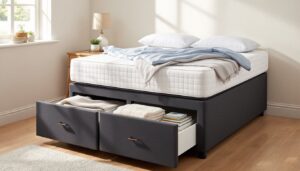
The space under a standard bed frame offers 10–20 cubic feet of storage, enough for off-season clothes, extra bedding, or a dozen pairs of shoes. Most people leave it empty or let dust bunnies claim it.
Rolling storage bins are the simplest fix. Look for low-profile plastic bins (6–8 inches tall) with wheels or casters. Measure your bed’s clearance first, platform beds sit lower (typically 8–12 inches off the floor) than traditional frames (12–18 inches). If you’re buying new bedroom storage units, bed frames with built-in drawers are worth the investment. These typically feature two to four drawers on ball-bearing slides, rated for 50+ pounds each.
For DIYers, building a rolling underbed drawer is straightforward. Use ¾-inch plywood for the base and sides, with 1×4 pine for the frame. Add 2-inch swivel casters (locking fronts, non-locking rears) and a rope handle. No fancy joinery needed, pocket screws and wood glue hold fine for light-duty use. Sand, prime, and paint to match your room. Total material cost runs $30–50, and it’s a two-hour build.
Safety note: Keep weight distributed evenly in underbed storage. Overloading one side can tip bins or damage casters. Avoid storing anything temperature-sensitive, underbed zones trap heat and dust.
Vertical Storage Solutions That Transform Your Walls
Walls are the most underused real estate in any bedroom. Floor space is finite, but walls offer 80+ square feet of vertical storage opportunity in a typical 10×12 room.
Floating shelves work for books, decor, and folded clothes. Install them with heavy-duty brackets (rated for 50+ pounds) fastened into wall studs. Use a stud finder and mark locations 16 inches on center (standard framing). If studs don’t align with your layout, use toggle bolts rated for drywall, they’ll hold 30–50 pounds per anchor in ½-inch drywall.
Wall-mounted pegboard or slatwall systems turn blank walls into modular storage. Pegboard (¼-inch tempered hardboard with ¼-inch holes on 1-inch centers) costs under $15 per 4×8 sheet at most home centers. Mount it with 1-inch spacers behind to allow peg clearance. Add hooks, baskets, and shelves as needed. It’s perfect for accessories, bags, hats, or jewelry. Many organizational systems use similar modular approaches for flexible layouts.
Tall bookcases and ladder shelves maximize vertical space without eating floor area. A 72-inch bookcase uses just 2–3 square feet of floor but provides 12–18 cubic feet of storage. Anchor tall furniture to the wall with furniture straps or L-brackets to prevent tip-over, especially in homes with kids or pets. The International Residential Code (IRC) doesn’t mandate this for bedrooms, but it’s smart practice.
For renters or those avoiding wall damage, tension rod systems fit between floor and ceiling (adjustable from 96 to 120 inches). Pair with hanging baskets, S-hooks, or fabric bins. They hold up to 30 pounds when properly tensioned.
Closet Organization Systems for Maximum Efficiency
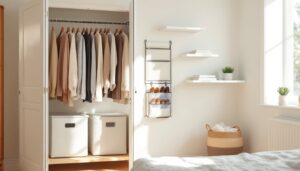
Standard bedroom closets waste 50% or more of their cubic footage with a single rod and shelf. Upgrading to a modular closet system can triple usable storage without expanding the footprint.
Adjustable closet kits (wire or laminate) are available at big-box stores starting around $100–150 for a 6-foot reach-in closet. These include double-hang rods, shelving, and drawer units. Wire systems are affordable and ventilated but can snag delicate fabrics. Laminate or wood systems look cleaner and support heavier loads, important if you’re storing folded jeans or bins. Choose based on your wardrobe and budget.
Double-hanging short items, shirts, folded pants, skirts, frees up the lower zone for a second rod, shoe racks, or bins. Leave long-hang space (60+ inches) for dresses and coats. Most closet systems mount directly to wall studs using a cleat or rail system. Locate studs, level the rail, and fasten with 3-inch wood screws. If designing for deeper storage needs, consider closet upgrades that increase both hanging and shelf space.
Closet drawers and bins keep smaller items sorted. Fabric bins or woven baskets work for accessories, undergarments, or scarves. Clear plastic bins let you see contents without opening. Label everything, it saves time and keeps systems working long-term.
Don’t forget the closet door. Over-the-door racks hold shoes, belts, or cleaning supplies. If you’ve got a standard hollow-core door, stick to lighter loads (under 20 pounds total). Solid wood doors handle more weight.
Multi-Functional Furniture for Small Bedrooms
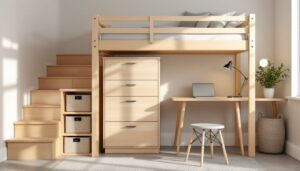
When floor space is tight, bedroom storage furniture that does double duty makes every square foot count. Multi-functional pieces consolidate storage without adding visual clutter.
Storage beds are the MVP here. Captain’s beds feature built-in drawers in the base, typically three to six drawers on each side. Ottoman beds use a gas-lift mechanism to access a large storage cavity under the mattress. These hold bulky items like comforters, luggage, or seasonal wardrobes. Measure mattress thickness before buying, many storage beds require low-profile mattresses (8–10 inches) to maintain comfortable bed height (18–24 inches total).
Storage benches and ottomans fit at the foot of the bed or under windows. Look for hinged tops and interior compartments. A 48-inch bench holds extra blankets, pillows, or out-of-season clothes. Build your own with a 2×4 frame, ¾-inch plywood top and sides, and upholstered cushion. Add piano hinges for the lid and soft-close hardware to prevent slamming. Many compact storage projects can be adapted to fit specific bedroom dimensions.
Nightstands with drawers or shelves replace open-top tables that collect clutter. Choose units with at least two drawers or a combination of drawer and open cubby. Wall-mounted floating nightstands save even more floor space, ideal for tight quarters. Mount them 24–28 inches above the mattress top for comfortable reach.
Headboards with built-in storage include shelves, cubbies, or cabinets. They’re great for books, charging stations, or display. DIY versions can be built with 1×12 or 1×10 pine boards mounted to a simple frame. Attach the frame to wall studs with lag screws, not just to the bed frame, you want the weight supported by the wall.
DIY Bedroom Storage Projects You Can Complete This Weekend
If store-bought bedroom storage units don’t fit your space or budget, building your own offers custom sizing and a sense of accomplishment. These projects require basic tools, drill/driver, circular saw or miter saw, tape measure, level, and square, and minimal experience.
Floating drawer nightstand: Cut a 12×16-inch piece of ¾-inch plywood for the drawer bottom. Build a simple box with 1×6 pine sides (cut to 12 inches deep, 5 inches tall). Add a 1×8 front panel and drawer slides rated for 75 pounds. Mount a 2×6 cleat to the wall studs, then attach the drawer unit. Finish with stain or paint. Detailed DIY furniture plans walk through drawer construction step-by-step.
Corner shelving unit: Dead corners waste space. Build a triangular shelf unit with 1×12 boards cut at 45-degree angles. Stack three to five shelves, connected by 1×2 vertical supports at the back corners. Secure the unit to wall studs with L-brackets. Sand raw edges and apply polyurethane or paint. Total cost: under $40.
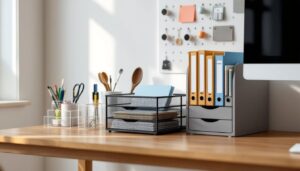
Pegboard accessory wall: Cut a 2×4-foot pegboard panel to fit above a dresser or desk. Paint it to match your walls. Mount with 1-inch spacers (use washers or short sections of PVC pipe) to create clearance for hooks. Add baskets, small shelves, and hooks for jewelry, hats, sunglasses, or keys. If you’re planning a broader workshop or creative space, sites like Fix This Build That offer project ideas for organizing tools and materials.
Closet shelf dividers: Keep stacks of sweaters or jeans from toppling with DIY dividers. Cut ¼-inch plywood or hardboard into 12-inch-tall panels. Notch the bottom to fit over your existing shelf (typically ¾ inch thick). Space dividers every 10–12 inches. No fasteners needed, friction holds them in place.
Safety reminder: Wear safety glasses when cutting, sanding, or drilling. Use a dust mask when sanding MDF or treated lumber. If using power saws, keep hands clear of the blade and use a push stick for narrow cuts.
Conclusion
Bedroom storage doesn’t have to mean cramming more furniture into tight quarters. Smart solutions, under-bed bins, vertical shelving, closet systems, and multi-functional pieces, work with the space you already have. Whether you’re mounting shelves, upgrading your closet, or building a weekend project, the key is measuring twice, anchoring to studs, and keeping weight limits in mind. With a few hours and the right approach, bedrooms transform from cluttered crash pads into organized, functional retreats.