Table of Contents
ToggleA pile of clean laundry on the chair. Jeans draped over the footboard. Sweaters overflowing from dresser drawers. Sound familiar? Bedroom clothing storage isn’t just about aesthetics, it’s about reclaiming space, reducing stress, and making mornings less chaotic. Whether someone’s dealing with a cramped closet, no closet at all, or simply too many clothes for the square footage, the right storage strategy can transform a bedroom from cluttered to calm. This guide walks through proven solutions, from closet systems that maximize vertical space to furniture that pulls double duty, plus DIY projects that deliver results without very costly.
Key Takeaways
- Proper bedroom clothing storage reduces stress, extends garment life, and improves sleep quality by minimizing visual clutter that increases cortisol levels.
- Double-hang rods, adjustable shelving, and specialty racks can nearly double closet capacity without structural changes or expensive renovations.
- Under-bed storage and creative solutions like wall-mounted rods, pegboards, and freestanding wardrobes offer practical storage for clothes in bedrooms without closets or limited square footage.
- Dual-purpose furniture such as storage beds, benches, and tall dressers maximizes small bedroom space while eliminating the need for separate storage pieces.
- DIY projects like pipe clothing racks ($50–$80), shelf dividers, and pegboard walls deliver functional storage solutions that can be completed in a single weekend.
Why Bedroom Clothing Storage Matters More Than You Think
Poor clothing storage isn’t just an eyesore, it costs time, money, and mental energy. When clothes are crammed into overstuffed drawers or piled on surfaces, wrinkles set in, items get forgotten and re-bought, and getting dressed becomes a frustrating scavenger hunt.
From a practical standpoint, proper storage extends the life of clothing. Folded sweaters stored flat won’t stretch out on hangers. Shoes kept off the floor avoid scuffs and dust. Seasonal items tucked away free up prime real estate for what’s actually being worn.
There’s also the spatial reality: bedroom square footage is often limited, and storage that doesn’t scale vertically or fit into unused zones (behind doors, under beds, above windows) wastes valuable space. A well-organized bedroom with efficient clothing storage can feel significantly larger without any structural changes.
Finally, bedroom clutter affects sleep quality. Studies consistently show that visual chaos in sleeping spaces increases cortisol and disrupts rest. Clothing storage that keeps surfaces clear and closets closed creates a calmer environment, one that actually supports the room’s primary function.
Closet Organization Systems That Maximize Every Inch
A standard reach-in closet with a single hanging rod and shelf wastes roughly 50% of available cubic footage. Upgrading to a modular closet system, whether wire, laminate, or solid wood, unlocks vertical space and customizes storage to actual wardrobe needs.
Key components to consider:
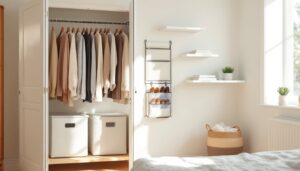
- Double-hang rods: Stack two rods vertically for shirts, blouses, and folded pants. This alone doubles hanging capacity. Mount the upper rod at 80–84 inches from the floor and the lower at 40–42 inches.
- Adjustable shelving: Fixed shelves force users to adapt. Adjustable brackets on standards (metal tracks) let someone reconfigure as wardrobe changes seasonally or over time.
- Drawer inserts or bins: Shallow drawers (4–6 inches tall) work better than deep ones for accessories, undergarments, and folded tees. Label them for speed.
- Specialty racks: Pull-out pant racks, belt hooks, and tie racks keep small items visible and wrinkle-free.
Wire systems (ClosetMaid, Rubbermaid) are budget-friendly and DIY-friendly, typically anchored into wall studs with 1.5-inch screws and supporting up to 50 pounds per linear foot when installed correctly. Laminate or wood systems (IKEA PAX, EasyClosets) offer a more finished look and can handle heavier loads, but often require more complex assembly.
Before installing any system, empty the closet completely and measure width, depth, and height at multiple points, older homes rarely have perfectly square closets. Plan the layout on paper or with a manufacturer’s online tool, prioritizing hanging space for daily-wear items and shelving for bulkier folded goods.
One often-missed upgrade: adding a closet light on a motion sensor. Task lighting makes it easier to see clothing colors accurately and eliminates the guesswork that leads to pulling out six black shirts to find the right one.
Creative Storage Ideas for Bedrooms Without Closets
Older homes, converted attics, and studio apartments often lack built-in closets entirely. That doesn’t mean clothing has to live in piles or suitcases, it just requires a bit more intentionality.
Freestanding wardrobes (armoires) are the most straightforward substitute. Look for units with a hanging rod, shelves, and ideally a drawer or two. Depths typically range from 18–24 inches, so measure doorways and pathways before buying, many larger armoires arrive flat-packed, but assembled dimensions can be surprising.
Open clothing racks work well in modern or industrial-style bedrooms. Heavy-duty garment racks rated for 200+ pounds can hold an entire wardrobe and cost a fraction of built-in systems. Position them against a wall to avoid a cluttered look, and use matching hangers (wood or velvet-coated) to create visual cohesion. Some homeowners also install a curtain or room divider in front of racks to hide contents when needed.
Wall-mounted solutions maximize vertical space without eating floor area. Pegboards with hooks and shelves can hold folded jeans, bags, hats, and accessories. Floating shelves stacked 12–16 inches apart become cubbies for rolled tees and sweaters. Wall-mounted rods with brackets (installed into studs or using heavy-duty anchors rated for 50+ pounds) create hanging space above dressers or in corners.
For small bedrooms, creative storage ideas and organization hacks demonstrate how vertical and corner spaces often go unused.
Clothing ladders, decorative ladder-style racks leaning against a wall, offer a place to drape the next day’s outfit or air out worn-but-not-dirty items. They’re not a primary storage solution but reduce chair-pile syndrome.
Finally, repurpose alcoves or nooks. A shallow alcove (10–14 inches deep) can fit tension rods and become a mini closet when fitted with a curtain. Even the space behind a bedroom door can host an over-the-door organizer with pockets for scarves, belts, or socks.
Under-Bed Storage Solutions for Seasonal Clothes
The space under a bed is often the largest untapped storage zone in a bedroom. For a standard queen bed, that’s roughly 30–40 cubic feet of volume going unused, enough to store an entire season’s wardrobe.
Rolling under-bed bins are the workhorse option. Choose clear plastic so contents are visible, or opaque if aesthetics matter. Look for bins with wheels or smooth-gliding casters, dragging a heavy bin across carpet or hardwood scratches floors and is a hassle. Measure bed clearance first: standard bed frames offer 6–12 inches, platform beds often just 4–6 inches.
Vacuum storage bags compress bulky items like winter coats, comforters, and sweaters to a fraction of their size. They’re ideal for truly seasonal clothing that won’t be accessed for months. Note: store these in climate-controlled areas, attics and basements with humidity swings can encourage mildew even inside sealed bags.
Bed risers lift a bed frame an additional 3–6 inches, creating enough clearance for standard bins. Ensure risers are rated for the bed’s weight plus occupants, cheaply made risers can crack under load. Install them on all four posts evenly to avoid an unlevel sleeping surface.
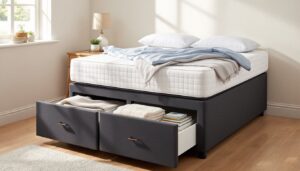
For a cleaner look, consider drawer-style under-bed storage. Some bed frames come with built-in drawers on tracks: aftermarket options slide under and pull out from the side. These work best for frequently accessed items like workout clothes or pajamas.
One caution: avoid storing clothes long-term in cardboard boxes under beds. Cardboard attracts moisture, pests, and dust, and won’t protect contents if a spill or leak happens. Invest in hard-sided bins with latching lids for anything staying under there more than a few weeks.
Furniture That Does Double Duty for Clothing Storage
In tight bedrooms, every piece of furniture should earn its footprint. Dual-purpose furniture blends storage with function, eliminating the need for separate dressers or bins.
Storage beds integrate drawers or hydraulic lift mechanisms directly into the frame. Platform beds with side drawers keep everyday clothing within arm’s reach. Ottoman-style beds lift up to reveal a cavernous compartment underneath, perfect for bulky bedding or off-season clothes. Hydraulic lift systems (gas pistons) make accessing contents easy and safe: cheaper manual-lift models can be awkward and heavy.
Storage benches placed at the foot of the bed or under a window add seating plus hidden compartments. Look for benches with flip-top lids and interior dividers to keep contents organized. Weight capacity matters if it’ll be used for seating, 250–300 pounds is typical for quality construction.
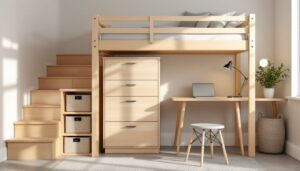
Nightstands with drawers replace open-shelf models that collect clutter. Tall, narrow dressers (5–7 drawers) maximize vertical space better than wide, shallow ones and fit into corners or tight walls. Measure drawer depth, shallow drawers (4–6 inches) suit undergarments and accessories: deeper ones (10–12 inches) handle jeans and sweatshirts.
Armoires and wardrobes function as standalone closets but can also house a TV, desk setup, or shoe storage depending on interior configuration. Custom inserts (hanging rods, pull-out shelves) tailor them to specific needs.
When shopping for dual-purpose furniture, prioritize solid construction. Particleboard and thin veneers sag under clothing weight and won’t survive repeated drawer use. Dovetail joints in drawers, 3/4-inch plywood carcasses, and metal glides rated for 75+ pounds signal quality that’ll last.
Folding furniture is often overlooked but useful in micro-bedrooms. Wall-mounted drop-leaf tables can hold folded laundry temporarily, and fold away when not in use. Murphy beds with built-in shelving keep clothing accessible without sacrificing sleeping space.
DIY Clothing Storage Projects to Try This Weekend
Not every storage solution requires a big budget or pro installer. These DIY projects deliver functional results with basic tools and materials, most completable in a weekend.
Pipe Clothing Rack
Industrial-style racks made from 3/4-inch or 1-inch black iron pipe and floor flanges create sturdy, customizable hanging space. Cost: around $50–$80 for materials.
Tools needed: Pipe wrench, level, drill, and 1/2-inch wood screws for anchoring flanges.
- Design the frame on paper, measure the intended space and plan height (60–72 inches) and width.
- Purchase pre-threaded pipe sections at a hardware store or have them cut and threaded to length.
- Assemble the frame: Use tees, elbows, and flanges to connect horizontal and vertical runs.
- Anchor floor flanges into studs or use heavy-duty toggle bolts rated for 100+ pounds if attaching to drywall.
- Hang clothes and enjoy the exposed, modern aesthetic.
For a polished look on walls, painted closet organization systems integrate seamlessly with existing décor.
Closet Shelf Dividers
Sweaters and folded clothes tend to topple on open shelves. Shelf dividers keep stacks upright.
Materials: 1/4-inch plywood or acrylic sheets, wood glue, small finishing nails.
- Measure shelf depth and desired divider height (typically 10–14 inches).
- Cut dividers to size using a circular saw or have them cut at the store.
- Sand edges smooth.
- Install vertically by gluing and nailing to the shelf underside, spacing every 10–12 inches.
Alternatively, tension rods installed front-to-back on shelves create instant dividers with no cutting required.
Pegboard Accessory Wall
Pegboard transforms blank walls into customizable storage for scarves, hats, belts, bags, and jewelry.
Materials: 1/4-inch pegboard, 1×2 furring strips, 2-inch screws, pegboard hooks and shelves.
- Locate and mark studs on the wall.
- Attach furring strips horizontally to studs, this creates clearance for hooks to insert.
- Mount pegboard to furring strips using screws every 12–16 inches.
- Paint or stain pegboard if desired.
- Arrange hooks, bins, and shelves as needed.
Pegboard’s flexibility means the layout can change anytime, just move hooks around.
Fabric Storage Bins
Custom-sized fabric bins fit into cube organizers, shelves, or under beds.
Materials: Canvas or duck cloth, fabric scissors, sewing machine (or fabric glue), cardboard for structure.
- Cut fabric to size based on desired bin dimensions, adding 1-inch seam allowances.
- Sew or glue sides and bottom, leaving the top open.
- Insert cardboard sheets in the base and sides for rigidity.
- Fold down the top edge and hem for a clean finish.
Safety note: When cutting materials, always wear safety glasses to protect from splinters or debris. When drilling or sawing, use hearing protection and a dust mask if working with treated lumber.
Conclusion
Efficient bedroom clothing storage doesn’t require a walk-in closet or a complete renovation, it requires intentional use of available space and the right mix of systems, furniture, and DIY ingenuity. Whether optimizing a closet with double rods, tucking seasonal items under the bed, or building a weekend pipe rack, small changes compound into a more organized, functional, and peaceful bedroom. Start with the messiest zone, tackle it methodically, and watch the rest fall into place.