Table of Contents
ToggleLiving in a small apartment means every square foot counts. Clutter piles up fast, and without a solid storage strategy, even a well-decorated space can feel cramped and chaotic. The good news? Smart storage isn’t about having more space, it’s about using the space you’ve got more strategically. From floor-to-ceiling shelving to furniture that pulls double duty, the right approach transforms a tight apartment into an organized, functional home. This guide covers practical, proven storage solutions that work in real-world small spaces, with specific products, measurements, and DIY-friendly tactics anyone can carry out.
Key Takeaways
- Vertical wall and ceiling storage is the most underutilized resource in small apartments—floating shelves, pegboard, and ceiling racks maximize space without eating up floor area.
- Multifunctional furniture like storage ottomans, platform beds with drawers, and expandable tables eliminate the need for single-purpose pieces and cut down clutter significantly.
- Hidden storage opportunities exist in overlooked spaces: under-bed areas, behind doors, above doorways, inside cabinet doors, and narrow gaps between appliances can transform a small apartment’s storage capacity.
- Small apartment storage solutions in kitchens and bathrooms should prioritize drawer dividers, pull-out organizers, magnetic strips, and over-toilet shelving to maximize efficiency in notoriously tight spaces.
- Double-hang closet rods, slim hangers, and hanging organizers instantly increase closet capacity without renovation, making bedroom organization achievable even in apartments without traditional closet space.
- Intentional planning—measuring spaces first, mounting securely, and choosing adaptable solutions—transforms even a 400-square-foot studio into a functional, organized home.
Why Smart Storage Is Essential in Small Apartments
Small apartments don’t come with the luxury of a walk-in pantry, spare bedroom, or sprawling garage. Without intentional storage planning, belongings end up stacked on counters, shoved under beds, or crammed into overstuffed closets. The result? Visual clutter that makes a space feel smaller than it actually is.
Space efficiency is the name of the game. In a 500-square-foot apartment, wasting even 10 square feet on poorly organized storage means losing 2% of your total living area. Multiply that across multiple zones, kitchen, bedroom, bathroom, and the impact adds up fast.
Smart storage also protects your investment. Proper organization reduces wear and tear on belongings, prevents damage from overcrowding, and makes it easier to maintain cleanliness. Plus, landlords appreciate tenants who don’t damage walls with improper mounting or leave behind a trail of adhesive residue from temporary fixes.
Before diving into solutions, take inventory. Walk through each room and identify pain points: where does clutter accumulate? Which items lack a designated home? Measuring available wall space, under-bed clearance, and closet dimensions upfront ensures any storage additions fit properly and don’t create new headaches.
Vertical Storage: Make Use of Your Walls and Ceiling
When floor space is limited, look up. Vertical storage is the single most underutilized resource in small apartments. Most renters and owners focus on ground-level solutions while feet of usable wall space sits empty.
Wall-mounted shelving is the workhorse of vertical storage. Floating shelves (typically 10–12 inches deep) work well for books, plants, or decorative storage boxes. Install them above desks, sofas, or entryway consoles. Use a stud finder to locate studs (vertical framing members, usually spaced 16 inches on center) for secure mounting. If studs aren’t where you need them, use toggle bolts rated for drywall, they can support 50+ pounds when properly installed.
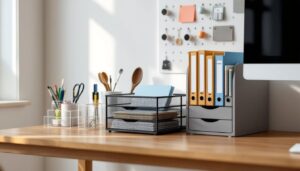
For kitchen and bathroom walls, consider pegboard or slatwall systems. These modular setups allow hooks and baskets to be repositioned as needs change. A 4×4-foot pegboard panel can hold utensils, pots, cleaning supplies, or tools without drilling multiple holes.
Ceiling-mounted racks are a game-changer in kitchens and entryways. Pot racks free up cabinet space and keep cookware accessible. In studios, overhead racks near the entryway can hold bikes, seasonal gear, or luggage. Always mount ceiling racks into joists (horizontal framing members supporting the ceiling) using lag bolts for safety, these systems can hold significant weight.
Tall, narrow bookcases (72–84 inches high, 12–18 inches deep) maximize vertical space without eating up floor area. Many people often overlook organizing compact areas by thinking horizontally rather than vertically. Place them in corners or tight gaps between furniture. Look for units with adjustable shelves to accommodate varying item heights.
Multifunctional Furniture That Does Double Duty
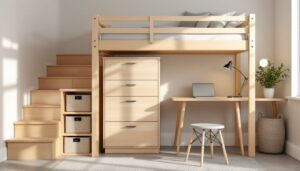
In a small apartment, furniture that serves only one purpose is a luxury you can’t afford. Multifunctional furniture combines seating, sleeping, and storage into single pieces, cutting down on the number of items needed.
Storage ottomans are the MVP of small-space living. A 30×30-inch ottoman can hold blankets, board games, or out-of-season clothing while serving as a coffee table or extra seating. Look for models with removable lids and interior dividers.
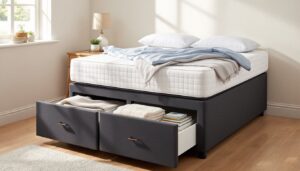
Platform beds with built-in drawers eliminate the need for a separate dresser. Standard designs include 2–4 large drawers (roughly 24×18×6 inches each) on rails beneath the mattress. Some models also feature hydraulic lift mechanisms that raise the entire mattress to reveal a cavernous storage cavity, ideal for bulky items like suitcases or winter coats.
Sofa beds have come a long way from the lumpy futons of the ’90s. Modern designs with memory foam mattresses and sturdy frames provide actual guest sleeping comfort. Measure carefully: a queen-size sofa bed needs about 90 inches of clearance when fully extended.
Expandable dining tables shrink to console or desk size when not in use, then extend to seat 4–6 for meals or entertaining. Drop-leaf, butterfly-leaf, and gateleg styles are all compact-friendly. Pair with folding or stackable chairs that tuck away in a closet.
Modular storage cubes (like the popular Kallax units) function as room dividers, TV stands, or quick organization fixes depending on how they’re arranged. A 4×4 Kallax unit (roughly 58×58 inches) can define a sleeping zone in a studio while providing 16 cubbies of storage on both sides.
Hidden Storage Opportunities You’re Probably Missing
Small apartments have dozens of overlooked nooks and crannies that can be turned into functional storage with minimal effort.
Under-bed space is the most obvious missed opportunity. Even without a platform bed, bed risers (typically adding 3–8 inches of clearance) create room for flat storage bins. Measure the space first: standard twin beds are 38×75 inches, full beds are 54×75 inches. Use wheeled bins for easy access.
Behind-door storage adds zero square footage but significant capacity. Over-the-door organizers with pockets or hooks work on bedroom, bathroom, and closet doors. Heavy-duty models can hold shoes, cleaning supplies, or pantry items. Make sure the organizer doesn’t interfere with door swing or hit light switches.
Above-door shelving is equally underused. A shallow shelf (6–8 inches deep) mounted above a doorway holds items you don’t need daily, extra toiletries, seasonal decor, or spare linens. This works best on doors with at least 6 inches of clearance to the ceiling.
Inside cabinet doors offers prime real estate for shallow storage. Adhesive hooks hold measuring cups or pot lids. Small wire racks can store spices, cleaning cloths, or hair tools. Keep added depth under 2 inches to avoid interfering with cabinet contents.
Toe-kick drawers are a more advanced DIY project but wildly effective in kitchens. The recessed space at the base of cabinets (usually 3–4 inches tall) can be retrofitted with shallow pull-out drawers for baking sheets, cutting boards, or flat serving platters. This requires basic carpentry skills and drawer slides rated for the application.
Many homeowners seeking smarter storage strategies discover that gaps between appliances or furniture are also fair game. Narrow rolling carts (6–10 inches wide) fit beside refrigerators or washers. These “gap carts” hold cleaning supplies, canned goods, or toiletries.
Kitchen and Bathroom Storage Hacks for Tight Spaces
Kitchens and bathrooms in small apartments are notoriously short on storage, but a few targeted upgrades make a big difference.
In the kitchen, start with drawer dividers and expandable organizers. A typical 18-inch-wide utensil drawer can hold 2–3x more when divided into zones. Adjustable dividers let you customize spacing for large ladles, small gadgets, and everything in between.
Pull-out cabinet organizers (like tiered shelving or lazy Susans) turn deep cabinets into accessible storage. Corner cabinets are notorious black holes: a lazy Susan (12–18 inch diameter) makes every item reachable.
Magnetic knife strips and utensil rails mount on walls or backsplashes, freeing up counter and drawer space. A 16-inch magnetic strip holds 6–8 knives safely out of reach of kids while keeping blades sharp (no rattling around in drawers).
Stackable shelf risers inside cabinets double usable space by creating a second tier for plates, mugs, or canned goods. Measure cabinet interior height first, most risers are 4–8 inches tall.
For those exploring creative furniture modifications, consider converting a rolling cart into a mobile pantry or coffee station that tucks into a corner when not in use.
In the bathroom, over-toilet shelving units (typically 24–28 inches wide) add three shelves without touching valuable floor space. Look for models with adjustable heights to fit around toilets with non-standard tank sizes.
Shower caddies and tension pole organizers keep toiletries off the tub edge. Tension poles install without drilling and support multiple baskets. Make sure the pole is rated for wet environments to prevent rust.
Under-sink organizers combat the jumbled mess of cleaning supplies and toiletries. Stackable bins or pull-out drawers designed to fit around plumbing make every inch usable. Measure the width between pipes before buying, clearances vary.
Medicine cabinets with recessed mounting save space compared to surface-mount models. If installing a recessed cabinet, check for studs and wiring first. In rental units, stick with surface-mount or freestanding options.
Closet and Bedroom Organization Strategies
Closets in small apartments are often tiny, oddly shaped, or nonexistent. Maximizing bedroom storage requires both internal closet upgrades and creative alternatives.
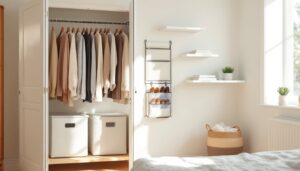
Double-hang closet rods instantly double hanging capacity. Most closets have a single rod at 60–68 inches, leaving 30+ inches of unused space below short items like shirts and jackets. Add a second rod at 40 inches for pants, skirts, or more shirts. Use closet rod brackets or an adjustable hanging organizer.
Shelf dividers prevent stacked clothes from toppling into a single heap. Wire or acrylic dividers (spaced 10–12 inches apart) keep sweaters, jeans, and towels neatly separated.
Slim hangers (like velvet or flocked styles) save 30–50% more space than bulky plastic hangers. Uniform hangers also create a cleaner, more organized appearance. If you’re ready to overhaul your system entirely, effective closet reorganization tactics can transform even the smallest wardrobe space.
Hanging organizers with cubbies (typically 12×12-inch squares) store shoes, accessories, or folded clothes. These work well in closets without built-in shelving.
For apartments without closets, freestanding wardrobes or clothing racks with shelving provide structure. Look for units with a footprint under 36×18 inches to avoid overwhelming the room. Add a fabric cover or curtain for a cleaner look.
Shoe storage is a persistent challenge. Over-the-door shoe organizers hold 12–24 pairs, or try under-bed shoe bins with clear tops for visibility. Tiered shoe racks (3–5 levels) fit in closet floors or tight corners. Those managing a large collection should explore specialized shoe storage setups that keep pairs organized and accessible.
Bedside storage can replace traditional nightstands in ultra-tight bedrooms. Wall-mounted floating shelves (8–10 inches deep) or clip-on bedside caddies hold books, phones, and glasses without taking floor space. Some designs hang over mattress edges or attach directly to bed frames.
For overall decluttering guidance, many experts at Real Simple recommend seasonal swaps, store off-season clothing in vacuum-sealed bags under the bed or on high shelves to keep everyday items accessible.
Conclusion
Small apartments demand creative thinking, but they don’t require sacrificing comfort or functionality. Vertical storage, multifunctional furniture, and hidden nooks all contribute to a clutter-free, livable space. The key is intentional planning: measure twice, mount securely, and prioritize solutions that adapt as needs change. With the right storage strategy, even a 400-square-foot studio can feel surprisingly spacious.