Table of Contents
ToggleBedroom square footage is precious real estate, yet most homeowners ignore the 10–15 cubic feet sitting empty beneath their mattress. Under bed storage beds transform this dead space into functional storage without eating into floor space or requiring a single wall-mounted shelf. They’re not just for cramped studio apartments, master bedrooms, guest rooms, and kids’ rooms all benefit from the extra capacity. Whether someone’s drowning in seasonal clothing, camping gear, or extra bedding, a storage bed offers a built-in solution that beats shoving plastic bins into the dark abyss under a standard frame.
Key Takeaways
- Under bed storage beds unlock 10–15 cubic feet of wasted space beneath mattresses, eliminating the need for bulky dressers or plastic bins that consume floor space.
- Drawer-style storage beds suit frequently accessed items like clothing and shoes, while hydraulic lift beds excel at storing bulky, infrequently used items like seasonal gear and luggage.
- Proper measurements are critical: drawer beds require 18–24 inches of side clearance, and lift beds need at least 24 inches of clearance at the foot for safe operation.
- Quality matters—invest in frames with ball-bearing slides rated for 50–75 pounds per drawer and lift pistons rated for 1,000+ cycles to avoid sagging or premature failure.
- Organize storage strategically by access frequency, use drawer dividers and clear bins, and maintain hardware every 6–12 months to keep your under bed storage bed functional for years.
- Budget $400–$1,200 for a queen-size under bed storage bed depending on type and materials, and always verify weight limits to safely support mattresses, sleepers, and stored items combined.
What Is an Under Bed Storage Bed and Why You Need One
An under bed storage bed is a bed frame engineered with integrated storage compartments, typically drawers, hydraulic lift mechanisms, or open cubbies, that use the vertical space between the mattress platform and the floor. Unlike tossing bins under a standard bed frame, these units are purpose-built with sturdy slides, reinforced platforms, and accessibility in mind.
Most frames stand 12–16 inches off the ground, compared to the typical 7–9 inches of a basic metal frame. That extra height accommodates full-extension drawer slides or gas-lift pistons without sacrificing mattress support. The frame’s construction, usually solid wood, engineered wood, or reinforced metal, must handle both the mattress load and the added weight of stored items, so expect heavier-duty joinery and hardware than budget frames.
Why invest in one? First, it eliminates the need for bulky dressers or plastic storage bins that collect dust. Second, it keeps items accessible but out of sight, no visual clutter. Third, it’s a smarter use of space than adding a standalone wardrobe or shelving unit that shrinks the room’s usable floor area. For renters who can’t install closet systems or homeowners maxing out existing storage, a storage bed is a non-invasive upgrade that moves with them.
Types of Under Bed Storage Beds to Consider
Choosing the right style depends on what’s being stored, how often it’s accessed, and the room’s layout. Here are the two dominant categories.
Platform Beds with Built-In Drawers
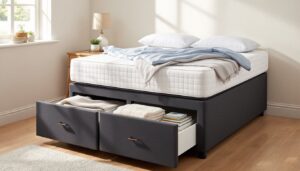
Drawer-style storage beds feature two to six drawers along the sides or foot of the frame. They slide out on ball-bearing or roller glides, opt for ball-bearing for smoother operation and longer life. Most drawers measure 24–36 inches deep and 6–10 inches tall, ideal for folded clothes, shoes, linens, or small electronics.
Key considerations:
- Clearance: Drawers need 18–24 inches of side clearance to open fully. Tight rooms or beds pushed against walls won’t work unless the drawers open from the foot.
- Weight capacity: Check the slide rating. Quality units handle 50–75 pounds per drawer: cheaper models sag or bind at half that.
- Assembly: Drawer beds typically arrive flat-pack. Expect 2–3 hours of assembly with a power drill and hex keys. Some models use cam-lock fasteners, reliable if tightened properly, but they can loosen over time on engineered wood.
Drawer beds excel for frequently accessed items like clothing or bedding. They’re also easier to organize with dividers or small bins inside each drawer, making them popular storage solutions for small spaces where every inch counts.
Hydraulic Lift Storage Beds
Lift storage beds use gas-lift pistons (similar to car hatchbacks) to raise the entire mattress platform, revealing a cavernous storage compartment underneath. Lifting the bed exposes 12–15 inches of vertical storage depth across the full footprint of the mattress, roughly 30–40 cubic feet for a queen.
Key considerations:
- Lifting mechanism: Quality pistons are rated for 1,000+ lift cycles and handle mattress weights up to 150 pounds. Cheap units fail within a year, leaving users manually holding up a queen mattress.
- Mattress compatibility: Lift beds work with any mattress type, but heavier memory foam or hybrid mattresses (80+ pounds) strain the pistons. Check the manufacturer’s weight rating.
- Access: Lifting requires standing at the foot or side and pulling up. It’s a two-handed operation, so accessing items mid-night is less convenient than opening a drawer.
- Floor clearance: The base sits directly on the floor or short legs (4–6 inches). No clearance needed around the sides, making lift beds ideal for rooms where furniture hugs walls.
Lift beds shine for storing bulky, infrequently accessed items, luggage, seasonal wardrobes, camping gear, spare comforters. They’re also favored in guest rooms where storage is needed but daily access isn’t. Many DIYers building their own furniture appreciate that lift beds simplify construction: no drawer boxes or slides to engineer, just a hinged platform and pistons.
How to Choose the Right Under Bed Storage Bed for Your Space
Picking the wrong storage bed means paying for features that don’t fit the room’s layout or storage needs. Start with these factors.
Measure the room, twice. Map out the bed’s footprint plus clearance zones. For drawer beds, add 18–24 inches on whichever sides the drawers open. For lift beds, confirm there’s at least 24 inches of clearance at the foot or side for lifting. Don’t forget ceiling height if the bed has a tall headboard, some upholstered storage beds exceed 60 inches total.
Match storage type to contents. Drawers suit clothing, shoes, accessories, or anything needing organization. Lift compartments suit bulk: suitcases, bedding sets, sports equipment, or off-season gear. If the plan is to store a mix, some models combine both: drawers on one side, lift access on the other.
Check the frame material. Solid wood (maple, oak, pine) is sturdy and repairable but heavy and pricey. Engineered wood (plywood, MDF, particleboard) is lighter and affordable but sensitive to moisture and weight. Metal frames with fabric or upholstered panels split the difference, strong, lighter, and often easier to assemble. Avoid particleboard bases for lift beds: the hinge hardware can tear out under repeated stress.
Factor in mattress height. Storage beds add 4–8 inches to the sleeping surface compared to a low-profile frame. Elderly users or anyone with mobility issues may struggle with a bed that sits 24+ inches off the floor. Test the height if possible, or plan on a step stool.
Review weight limits. The frame must support the mattress, sleepers, and stored items. Most quality storage beds are rated for 500–800 pounds total. Heavier users, memory foam mattresses, and full drawers add up quickly, don’t assume the frame can handle it without checking specs.
Consider assembly complexity. Drawer beds with six drawers and a footboard can take 3–4 hours and two people. Lift beds are often simpler: bolt the base together, attach pistons, drop in the platform. If tackling assembly solo, look for models with pre-installed drawer slides and cam-lock connectors. A power drill, level, and rubber mallet make the job faster.
Budget realistically. Expect $400–$800 for a queen-size drawer bed with quality hardware. Lift beds run $500–$1,200 depending on the piston system and materials. Cheaper options exist but often feature flimsy slides, thin veneers, or inadequate weight ratings. Factor in mattress cost if buying new, a storage bed’s extra height may require deeper fitted sheets (15+ inches).
Maximizing Your Under Bed Storage: Organization Tips and Best Practices
A storage bed only works if it’s organized. Tossing loose items into a lift compartment or overstuffing drawers defeats the purpose. Use these strategies to keep things accessible and protect the frame.
Sort by access frequency. Store rarely used items (holiday decor, archived files, guest bedding) in the back of lift compartments or lower drawers. Keep everyday essentials (socks, T-shirts, gym clothes) in the most accessible drawers. Label bins or use clear containers inside lift compartments so contents are visible when opened.
Use drawer dividers or bins. Even wide, shallow drawers turn chaotic without dividers. Fabric bins or drawer organizers (sold in 3–6 inch heights) corral small items like undergarments, chargers, or accessories. This also prevents items from sliding to the back when drawers open.
Respect weight limits. Don’t max out drawer slides with books or tools. Distribute weight evenly across all drawers. For lift beds, keep heavier items toward the hinged side to reduce strain on pistons.
Protect stored items from dust and moisture. Even enclosed compartments allow some air exchange. Store clothing in breathable cotton bags or vacuum-sealed bags for long-term items. Avoid cardboard boxes under beds, they attract moisture and pests. Hard-shell plastic bins with snap lids work better, and many easy storage solutions recommend using airtight containers for anything stored more than a few months.
Maintain the hardware. Every 6–12 months, vacuum out drawer tracks and wipe slides with a dry cloth. Apply a silicone-based lubricant (not WD-40, which attracts dust) to metal slides. Check lift pistons for smooth operation, if the bed feels harder to lift, the pistons may be failing and should be replaced before they snap.
Consider bed risers for non-integrated storage. If someone already owns a bed they love, adjustable bed risers (available in 3–8 inch heights) can create enough clearance for low-profile storage bins. It’s not as elegant as a built-in system, but it’s a budget-friendly stopgap. Just confirm the risers are rated for the bed’s total weight, cheap plastic risers crack under heavy frames.
Plan for seasonal swaps. Rotate stored items twice a year. In spring, swap winter coats and boots for summer gear. In fall, reverse it. This keeps storage relevant and prevents the bed from becoming a black hole of forgotten items. Experts at Apartment Therapy often recommend seasonal capsule wardrobes paired with under-bed rotation to maximize closet and bed storage together.
Conclusion
Under bed storage beds turn wasted space into a functional asset without requiring wall space, extra furniture, or renovation. Whether choosing drawers for daily access or a lift system for bulk storage, the right bed frame can reclaim 30+ cubic feet of usable capacity. Measure carefully, match the design to what’s being stored, and maintain the hardware, it’ll outlast the mattress by years.