Table of Contents
ToggleShoes pile up faster than anyone expects. In apartments, condos, and compact homes, a dozen pairs can quickly become a tripping hazard or an eyesore. Without a plan, footwear migrates from the entryway to the bedroom, closet floor, and under furniture. The good news? Small spaces don’t have to mean sacrificing organization. With the right storage strategies, vertical systems, hidden compartments, and multi-functional furniture, anyone can reclaim floor space and keep shoes accessible, protected, and out of sight.
Key Takeaways
- Small space shoe storage ideas should prioritize vertical solutions like wall-mounted racks and floating shelves to maximize floor space and improve home organization in compact living areas.
- Over-the-door organizers and under-bed storage bins provide quick, non-permanent solutions that work well for lightweight footwear and can free up valuable real estate without renovation.
- Multi-functional furniture such as storage benches and flip-down shoe cabinets combine seating or style with shoe organization, making them ideal for apartments and condos where space is limited.
- DIY projects using PVC pipes, wooden crates, or tension rod dividers offer affordable, customizable alternatives that can be tailored to exact dimensions and aesthetic preferences.
- Organized shoe storage protects footwear from damage, improves traffic flow in entryways and hallways, and creates momentum for organizing other areas of a compact home.
- Consistent daily habits—putting shoes away immediately and using labeled bins—are as important as the storage system itself to maintain long-term organization in small spaces.
Why Smart Shoe Storage Matters in Compact Homes
Shoes aren’t just a clutter problem, they’re a space management challenge. In homes under 1,000 square feet, every square foot counts. Leaving shoes scattered on the floor wastes valuable real estate and makes rooms feel smaller and more chaotic.
Proper shoe storage protects footwear from dust, moisture, and accidental damage. Leather boots left in a heap can crease permanently. Sneakers tossed in a pile trap odor and dirt. Stacking shoes on a dedicated rack or shelf extends their lifespan and keeps them ready to wear.
Beyond function, organized shoe storage improves traffic flow. Entryways and hallways are high-traffic zones. A jumbled shoe pile forces people to sidestep or kick footwear out of the way, creating friction. A slim shoe cabinet or wall-mounted rack clears the path and makes coming and going smoother.
Finally, visible shoe chaos affects how a home feels. Even if the rest of the space is clean, a mess of shoes by the door makes the whole place look disorganized. Tackling shoe storage first often creates momentum for organizing other areas.
Vertical Shoe Storage Solutions That Maximize Wall Space
When floor space is limited, the walls become prime real estate. Vertical shoe storage moves footwear up and off the ground, freeing up valuable square footage for walking, furniture, or other storage needs.
Wall-mounted shoe racks attach directly to studs with screws and can hold anywhere from six to twenty pairs, depending on design. Look for racks with angled shelves, they display shoes at a tilt, making it easier to see each pair and grab what’s needed. Install racks at eye level in a closet or along a hallway wall. Make sure to anchor into studs or use heavy-duty drywall anchors rated for at least 50 pounds to prevent sagging or pullout.
Floating shelves offer a cleaner, more customizable look. Standard 1×6 or 1×8 pine boards work well for lightweight shoes like flats and sneakers. Space shelves 10 to 12 inches apart vertically to accommodate most adult shoes. For heavier boots, upgrade to 3/4-inch plywood with L-brackets anchored into studs. Paint or stain shelves to match the room’s trim for a built-in appearance.
Pegboard systems add flexibility. Mount a 4×4-foot pegboard panel to the wall and use metal or wooden pegs to create custom shoe slots. Rearrange pegs as the collection grows or changes seasonally. Pegboard works especially well in mudrooms and garages where function trumps aesthetics. Prime and paint the pegboard to prevent moisture damage in humid climates.
Over-the-Door Organizers and Hanging Racks
Over-the-door shoe organizers are the fastest no-drill solution. These fabric or vinyl pouches hang from the top of any standard 1-3/8-inch interior door and hold 12 to 24 pairs depending on pocket size. They work best for lightweight shoes, flip-flops, sandals, canvas sneakers. Heavier boots can stretch the pockets and make the organizer sag.
Check door clearance before buying. Some organizers add 2 to 3 inches of depth behind the door, which can interfere with opening fully or hitting adjacent walls. Measure the gap between the door and the wall when the door swings open. If clearance is tight, look for slimmer models with mesh pockets instead of thick vinyl.
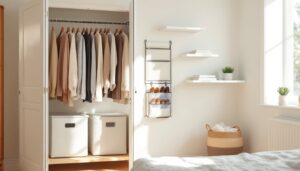
Hanging shoe racks with rigid shelves offer more structure. These units hook over the door but feature canvas shelves with internal cardboard or plastic reinforcement. They support boots and heavier footwear better than pocket organizers. Some models include side pockets for shoe care supplies, brushes, polish, laces. Many homeowners using strategic closet organization methods find that pairing over-door racks with shelf dividers creates a complete system.
Under-Bed and Hidden Storage Options
The space under a bed is often wasted. In small homes, that’s prime storage territory. A standard queen-size bed offers roughly 18 to 21 square feet of under-bed real estate, enough for dozens of pairs of shoes.
Rolling under-bed bins make access easy. Look for bins with wheels or glides on the base. Clear plastic models let occupants see contents at a glance, while fabric bins with lids keep dust out. Measure bed clearance first, most standard bed frames sit 6 to 8 inches off the floor, but platform beds can be as low as 3 inches. Low-profile bins designed for platform beds typically max out at 5 inches tall.
For taller bed frames (12 inches or more), consider stacking two layers of bins. Use shorter bins (around 6 inches) so the stack stays below the frame height. Label bins by season or shoe type, sandals, sneakers, boots, to speed up retrieval.
Bed risers create extra clearance. These plastic or wood blocks lift each bed leg by 3 to 6 inches. Most risers are rated for 1,200 to 1,500 pounds, more than enough for a bed and mattress. Make sure risers have a recessed cup on top to prevent the bed leg from sliding off. Skip risers on beds with wheels, they can create instability.
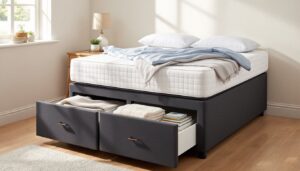
Built-in storage beds eliminate the need for bins entirely. Platform beds with drawers offer dedicated compartments that slide out from the sides or foot of the bed. These drawers typically measure 24 to 30 inches deep, plenty of room for shoes laid flat or standing upright. Some models feature hydraulic lift mechanisms that raise the entire mattress platform, exposing a storage cavity underneath. Lift-up beds work well for long-term storage of seasonal footwear but aren’t practical for daily access.
Homeowners interested in maximizing hidden space often explore comprehensive storage strategies that combine under-bed, vertical, and furniture-based solutions.
Multi-Functional Furniture for Shoe Storage
Furniture that does double duty saves space and money. Instead of a separate shoe rack and seating, one piece handles both.
Storage benches are the most common option. These units feature a hinged lid that lifts to reveal a compartment inside. Typical interior dimensions run 36 to 48 inches wide by 14 to 16 inches deep, enough for 10 to 15 pairs depending on shoe size. Look for benches with cushioned tops for comfortable seating while putting on or taking off shoes. Place benches in entryways, mudrooms, or at the foot of a bed.
Construction matters. Solid wood benches handle more weight, 250 pounds or more, and last longer than particleboard models. Check the hinge quality. Cheap hinges sag or break after a few months of daily use. Upgrade to continuous or piano hinges for better durability.
Ottoman storage cubes work in living rooms or bedrooms where a bench might look out of place. These fabric-covered cubes come in sizes ranging from 15×15 inches (holds about 4 pairs) to 24×24 inches (holds 8 to 10 pairs). Stack multiple cubes to create modular storage that adapts as needs change. Some models have rigid tops that double as extra seating or footrests: others have softer lids suitable only for lightweight use.
Shoe cabinets with flip-down doors combine slim profiles with high capacity. These tall, narrow cabinets, typically 24 to 30 inches wide and 6 to 8 inches deep, hold 12 to 30 pairs in angled compartments. The doors tilt out rather than swing open, so the cabinet needs only a few inches of clearance in front. They’re ideal for narrow hallways or tight entryways where traditional furniture won’t fit.
Some cabinets include a flat top surface for keys, mail, or decor. Make sure the cabinet is anchored to the wall, especially if there are kids or pets in the home. Top-heavy cabinets can tip forward when multiple doors are open at once.
According to experts at Apartment Therapy, multi-functional furniture is one of the most effective ways to maximize utility in compact layouts without sacrificing style.
DIY Shoe Storage Projects for Small Spaces
Building custom shoe storage doesn’t require advanced carpentry skills. A few basic tools and materials can create solutions tailored to exact dimensions and style preferences.
PVC pipe shoe racks are fast and cheap. Buy 4-inch diameter PVC pipe from a home center and cut it into 12-inch lengths using a hacksaw or miter saw. Sand the cut edges smooth. Stack and glue the pipes together with PVC cement in a honeycomb pattern, each pipe becomes a cubby for one pair of shoes. A rack made from 15 pipes (three rows of five) fits in a closet floor and holds 15 pairs. Paint the pipes with spray paint rated for plastic to match the room’s decor.
Wooden crate shoe shelves offer rustic charm. Buy unfinished wooden crates from craft stores (typically 12x12x9 inches). Sand any rough spots and apply polyurethane or paste wax to protect the wood. Stack crates on their sides, open-end facing out, and secure them with wood glue and 1-1/4-inch finish nails or small L-brackets. A stack of six crates creates a 2×3 grid that fits in a closet or entryway and holds at least 12 pairs. Leave some cubes empty for decorative items or baskets.
Ladder shoe racks repurpose old wooden ladders. Lean a 6-foot step ladder against the wall at a slight angle (use a furniture anchor strap to secure it). The ladder rungs become shoe shelves. This works best for lightweight shoes, heels, flats, sandals. Heavier boots can cause the ladder to shift or tip.
Tension rod dividers organize shoes inside existing closets. Install spring-loaded tension rods vertically between closet shelves to create dividers for boots or tall shoes. This keeps boots upright and prevents them from flopping over and losing their shape. Use rods rated for at least 10 pounds of pressure, cheap rods slip under weight.
For a more polished look, resources at Martha Stewart offer detailed tutorials on building custom shoe storage using reclaimed wood and simple joinery techniques.
Safety note: Wear safety glasses when cutting PVC or wood. Use a dust mask when sanding. Work in a well-ventilated area when applying finishes or adhesives.
Closet and Entryway Shoe Organization Hacks
Closets and entryways are ground zero for shoe clutter. Optimizing these high-traffic zones makes a dramatic difference in how organized a home feels.
Slant-front shoe racks fit neatly on closet floors. These racks tilt shoes forward at a 20 to 30-degree angle, making each pair visible and easy to grab. Models come in stackable tiers, 2, 3, or 4 levels high, and hold 6 to 12 pairs per unit. They’re typically made from coated wire or wood slats. Metal racks are lighter and easier to move: wood racks look more finished but weigh more.
Shelf dividers prevent shoe stacks from toppling over on closet shelves. These acrylic or wire partitions slide onto shelves and create separate compartments for each pair or category. They’re especially useful for keeping heels, flats, and sneakers sorted. Space dividers 6 to 8 inches apart for most adult shoes.
Toe-forward shoe storage doubles capacity on shelves. Instead of placing shoes side by side, store them toe-to-heel in a single row. One shoe points forward, the next points backward, and so on. This interlocking method fits twice as many pairs in the same shelf space. It works best for similar-sized shoes, mixing sandals and boots in one row creates imbalance.
Hooks and pegs in entryways keep frequently worn shoes off the floor. Install heavy-duty coat hooks (3 to 4 inches apart) at baseboard level. Hang shoes by their heel loops or laces. This works for running shoes, work boots, and kids’ sneakers. Shoes dry faster when hung, reducing odor buildup.
Baskets and bins corral everyday footwear. Place a low-profile wicker or wire basket (18×18 inches) by the front door for shoes that get worn daily. This keeps them contained but accessible. Empty the basket weekly and return shoes to long-term storage to prevent overflow.
Label everything. Use a label maker or adhesive chalkboard labels on bins, shelves, and cubbies. Labels speed up put-away and help everyone in the household know where shoes belong. For shared spaces, assign each person a designated spot by name.
For entryways narrower than 36 inches, skip furniture entirely and use wall-mounted solutions. A row of coat hooks with shoe shelves underneath, commonly called hall trees, provides storage without blocking the walkway. These units are typically 12 inches deep, leaving plenty of clearance.
Guides at Real Simple emphasize that consistent daily habits, putting shoes away immediately rather than leaving them by the door, are just as important as the storage system itself.
Another approach involves integrating easy-access storage that keeps the most-used pairs within arm’s reach while seasonal or formal shoes stay tucked away. Combining short-term and long-term storage reduces daily clutter without sacrificing convenience.