Table of Contents
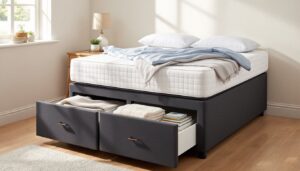
ToggleThat cavernous space beneath your bed probably holds dust bunnies, forgotten magazines, and maybe a single lost sock. It’s roughly 12 to 18 inches of vertical clearance across 20 to 40 square feet, depending on your bed size, that’s doing absolutely nothing for you. Under the bed storage drawers turn that dead zone into functional square footage without taking up an inch of floor or wall space. Whether you’re in a cramped apartment or just tired of overflowing closets, building or installing drawer units under your bed is a straightforward weekend project that delivers serious storage capacity.
Key Takeaways
- Under the bed storage drawers transform unused space beneath your bed into 16–20 cubic feet of organized storage without consuming floor or wall space.
- Rolling drawers work best for lightweight items like clothing and linens, while pull-out units with full-extension slides support heavier loads up to 75–100 pounds for tools and books.
- Proper bed clearance is essential—measure height from floor to bed frame and ensure at least 6–8 inches of vertical space for drawers to fit and operate smoothly.
- Under bed storage drawers prevent dust accumulation and keep contents hidden better than open bins, making them ideal for small spaces like cramped apartments.
- DIY under-bed drawer projects cost $15–$30 per unit and require minimal tools like a saw and drill, making them an affordable weekend project for most homeowners.
- Label your drawers and use them strategically for seasonal clothing rotation, shoe storage, craft supplies, or emergency kits to maximize organization and accessibility.
Why Under the Bed Storage Drawers Are a Game-Changer
床下storage isn’t just about stuffing bins into the gap. Drawers offer structured, accessible storage that keeps items clean and organized.
Most beds sit 7 to 15 inches off the floor. Standard platform beds give you about 7 to 10 inches, while beds with metal frames or adjustable risers can reach 15 inches or more. That’s enough clearance for shallow rolling drawers or stackable units. If you measure less than 6 inches, you’re limited to ultra-flat storage bags, drawers won’t fit.
Drawers protect stored items from dust accumulation better than open bins or zippered bags. They also keep contents hidden, which matters if your bedroom doubles as a guest room or workspace. No more shoving plastic totes out of sight when company arrives.
Under-bed drawers are especially valuable in small spaces where closet real estate is limited. A queen bed offers roughly 33 square feet of footprint. Even shallow 6-inch-tall drawers across that area can hold 16 to 20 cubic feet of storage, equivalent to a small dresser. That’s enough room for off-season clothing, extra bedding, shoes, or hobby supplies.
One often-overlooked benefit: drawer systems keep you from over-packing. Open bins encourage you to cram items in until the lid barely closes. Drawers force you to organize by category and keep things accessible.
Types of Under the Bed Storage Drawers
Not all under-bed drawers are built the same. The right type depends on your bed frame, floor clearance, and what you plan to store.
Rolling Drawers with Wheels
Rolling drawers are the easiest to access and move. They typically sit on four swivel casters (wheels), allowing you to pull them out with minimal effort even when fully loaded.
Most rolling units are made from fabric over a collapsible wire frame or rigid plastic. Fabric versions are lightweight and affordable but lack the structure to hold heavy items like books or tools. Hard-shell plastic or wood rolling drawers can support more weight, up to 30 to 50 pounds depending on the caster rating, but they’re bulkier and harder to store when not in use.
Look for casters rated for the load you plan to store. Cheap wheels (under 1.5 inches in diameter) can crack on hardwood or catch on carpet. Larger wheels (2 inches or more) roll smoothly on most surfaces. If you have plush carpet, consider drawers with wider casters to prevent digging.
Rolling drawers work best under beds with at least 8 inches of clearance. Measure from the floor to the bottom of your bed frame’s side rails, not the mattress. If your bed has a center support bar, check that it won’t block the drawer’s path.
Pull-Out Drawer Units
Pull-out drawer units are built more like furniture. They’re constructed from solid wood, plywood, or medium-density fiberboard (MDF) and feature drawer slides or glides for smooth operation.
These units come in two styles: standalone boxes that slide on the floor, or drawer assemblies that mount to the bed frame itself. Standalone units are easier to install, they just slide into place, but they rely on bottom-mounted glides or felt pads to reduce friction. Frame-mounted units use side-mount drawer slides (the same hardware you’d find in a kitchen cabinet) for a cleaner pull and better weight capacity.
Pull-out drawers handle heavier loads than rolling units. A well-built plywood drawer on full-extension slides can hold 75 to 100 pounds without sagging. That makes them suitable for storing tools, files, or dense items like winter boots.
Installation requires more effort. Frame-mounted units need to be screwed into the bed’s side rails, which may not be feasible with metal frames or beds without accessible attachment points. If you’re building your own, expect to spend a few hours cutting panels, assembling joints, and installing slides. Standalone units are simpler but still require square cuts and basic joinery if you’re going the DIY furniture building route.
How to Choose the Right Under the Bed Storage Drawers
Start by measuring your bed’s clearance and footprint. You need three dimensions:
- Height: Measure from the floor to the underside of the bed frame (not the mattress). Subtract 1 inch to account for carpet or uneven floors.
- Width: Measure the clear span between the bed frame’s legs or side rails. Don’t assume it matches your mattress width.
- Depth: Measure from the headboard to the footboard, again accounting for obstructions like center support bars.
Once you have those numbers, decide what you’re storing. Clothing and linens compress, so fabric drawers work fine. Shoes, books, and tools need rigid walls to prevent crushing.
Consider access patterns. If you’ll open drawers daily, invest in smooth-rolling casters or full-extension slides. For seasonal storage you’ll access twice a year, simpler designs are adequate.
Check your flooring type. Hardwood and tile allow smooth rolling but can scratch easily, look for rubber or nylon wheels. Low-pile carpet is manageable with standard casters. High-pile or shag carpet will fight you: pull-out units with glides work better.
If you’re buying pre-made drawers, confirm the dimensions include the wheels or slides. A drawer listed as 6 inches tall might be 7 inches total with casters attached, which could be too tall for your clearance.
For DIY builds, plan for material thickness. If you’re using 3/4-inch plywood, the interior dimensions of your drawer will be 1.5 inches narrower and shorter than the outer box (0.75 inches lost on each side). Cut your panels accordingly or you’ll end up with a drawer that won’t fit.
Weight capacity matters more than you’d think. Overloading drawers causes casters to crack, slides to bind, and bottoms to sag. If you’re storing more than 30 pounds per drawer, use 1/2-inch or thicker plywood for the bottom panel and reinforce it with a center support cleat.
Creative Ways to Use Under the Bed Storage Drawers
Under-bed drawers aren’t just for spare blankets. Strategic use turns them into dedicated zones that reduce clutter elsewhere in your home.
Seasonal clothing rotation is the most common application. Store winter sweaters and coats during summer, then swap them out when the weather turns. Rolling your clothes instead of folding them maximizes space and minimizes wrinkles.
Shoe storage works especially well in shallow drawers. Most adult shoes are 4 to 6 inches tall when laid flat. A single drawer under a queen bed can hold 12 to 20 pairs depending on the layout. Use dividers to keep pairs together.
Kids’ toys and games disappear neatly into drawers, especially bulky items like board games, puzzles, or building block sets. Label drawers by category so kids can (theoretically) put things back where they belong.
Craft supplies and hobby materials often accumulate in multiple locations. Centralizing yarn, fabric scraps, scrapbooking paper, or model kits in dedicated drawers keeps projects organized and prevents you from buying duplicates you didn’t realize you had.
Linens and bedding are obvious candidates. Extra sheet sets, pillowcases, and comforters stay clean and accessible without monopolizing closet shelves. Many creative storage hacks suggest vacuum-sealed bags, but drawers keep fabrics fresher and easier to grab.
Office supplies and files can live under a guest bed in a home office. Store printer paper, binders, or archived documents in shallow drawers so your workspace stays uncluttered.
Emergency supplies like flashlights, batteries, first-aid kits, and bottled water fit well in under-bed drawers. They’re out of the way but accessible when needed. Just avoid storing perishable items or anything sensitive to temperature swings.
DIY Under the Bed Storage Drawer Ideas
Building your own under-bed drawers lets you customize dimensions and save money. Here are three approachable projects.
Simple Rolling Box with Casters
This is the easiest build. Cut four panels from 1/2-inch or 3/4-inch plywood: two sides, a front, and a back. Cut a bottom panel from 1/4-inch plywood or hardboard. Assemble the box with wood glue and 1-1/4-inch brad nails or screws. Attach four 2-inch swivel casters to the bottom corners using 1-inch screws. Add a rope handle or cut a finger pull in the front panel.
Total material cost runs about $20 to $30 per drawer, depending on plywood prices in your area. A circular saw or miter saw handles the cuts: a cordless drill drives the screws. Wear safety goggles and a dust mask when cutting plywood, the glue layers create fine dust.
Drawer on Full-Extension Slides
This project requires more precision but delivers smoother operation. Build a basic box as above, but install side-mount drawer slides rated for at least 75 pounds. Mount the slides to the bed frame’s side rails using 1-1/4-inch wood screws. Attach the mating slide pieces to the drawer sides.
Full-extension slides allow the drawer to open completely, so you can access items at the back. Measure carefully, slides need to be level and parallel or the drawer will bind. Use a carpenter’s level and double-check your measurements before drilling.
If your bed frame is metal or lacks mounting points, build a simple base frame from 1×4 pine that sits on the floor and provides attachment points for the slides. This adds an extra step but works with any bed type.
Fabric Drawer with PVC Frame
For a lightweight, collapsible option, build a frame from 1/2-inch PVC pipe and fittings. Cut pipes to form a rectangular box, then connect corners with 90-degree elbow fittings. Glue joints with PVC cement for rigidity. Sew a fabric sleeve or use heavy canvas drop cloth secured with zip ties to create walls and a bottom. Attach casters to the bottom corners using metal corner brackets and screws.
This design is ideal for renters or anyone wanting portable, small-space solutions that can be disassembled and moved easily. Total cost is about $15 to $25 per unit. Use a PVC cutter or hacksaw to cut pipes, wear gloves to protect your hands.
Finishing Touches
Sand all wood edges with 120-grit sandpaper to prevent splinters. Apply primer and paint or a clear polyurethane finish to protect the wood from dust and moisture. Let finishes cure fully before loading drawers, uncured paint can transfer to stored fabrics.
Label drawers with adhesive labels or chalkboard paint so you know what’s inside without pulling them out. For extra protection, line drawer bottoms with shelf liner to prevent items from sliding around.